2026-10-26 · Dan Kowalski
Dumpster Rental Permits in Toledo Ohio
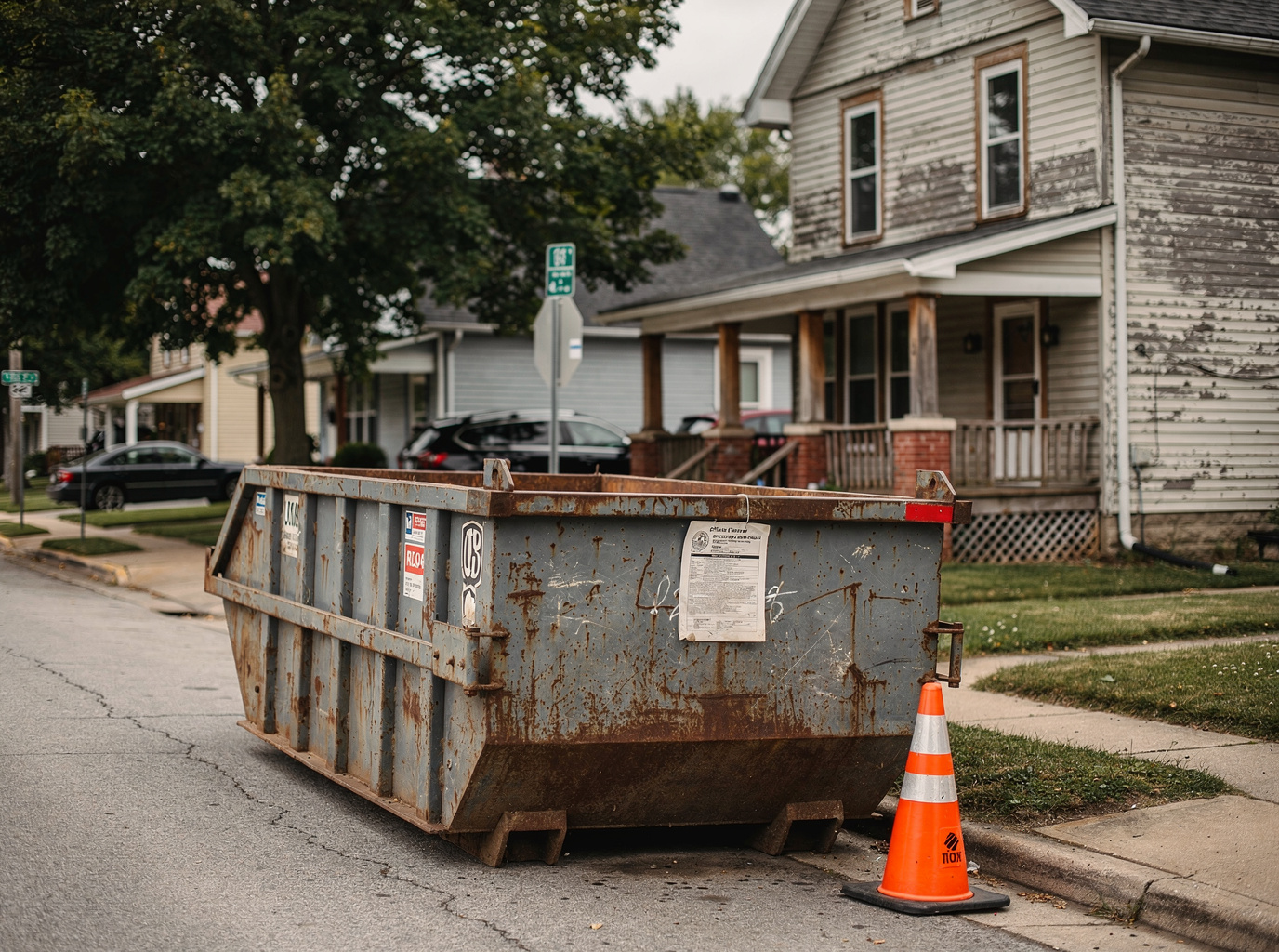
In Toledo Ohio a permit from the City of Toledo is required before placing a dumpster on any public street, alley, or right-of-way in neighborhoods such as Old West End, Downtown Toledo, or Point Place. The rule applies whether the project involves a residential renovation near the Toledo Museum of Art or a cleanup along the Maumee River. Property owners in Ottawa Hills border areas often need the same approval even when the dumpster sits partly on private driveways that cross public sidewalks.
When a Permit Is Required
The City of Toledo mandates permits whenever the dumpster will occupy space on public pavement or block pedestrian access. This covers most residential jobs in older housing stock found in Downtown Toledo and the Old West End where narrow streets and tight lots leave little room on private property. Projects in Point Place near Lake Erie also trigger the requirement because lake-effect snow and spring melt often push crews to use street space for larger containers. Homeowners in nearby Perrysburg, Oregon, and Sylvania face similar rules when their work crosses into Toledo city limits. Without the permit, crews can be ordered to remove the unit the same day, delaying schedules during peak spring and fall renovation seasons.
How the Application Process Works
Applicants submit a simple form to the City of Toledo Division of Engineering Services that includes the address, dumpster size, and expected duration. Most permits cover 7 to 14 days and can be extended once for an additional fee. Applications tied to addresses in the Old West End or near Fifth Third Field receive extra scrutiny because of higher pedestrian traffic and historic district guidelines. Residents often coordinate with their rental provider to list the exact placement spot so inspectors can verify clearance from fire hydrants and driveways. Processing usually takes two to five business days, so planning ahead prevents gaps between delivery and project start dates.
Neighborhood and Terrain Factors
Older brick homes in the Old West End and Downtown Toledo frequently sit on narrow lots with limited side-yard access, forcing more street placements and therefore more permit requests. Near the Maumee River, soil saturation after heavy rains can make soft shoulders unsafe for heavy containers, pushing crews to approved hard-surface locations that still require city approval. In Point Place, winter lake-effect snow from Lake Erie creates deeper drifts that affect where a unit can safely sit without violating sight-line rules at intersections. Ottawa Hills border properties often involve larger lots, yet many still need permits when the container crosses the public sidewalk line. These local conditions mean permit reviewers look at photos and site sketches more closely than in flatter, newer subdivisions.
Winter and Seasonal Timing
Lake-effect snow from Lake Erie changes permit logistics between December and March. Crews must show that the unit will not block snowplow routes or create ice hazards, which adds notes to the application for placements in Point Place and near the Maumee River. Many residents schedule larger cleanouts in late fall to avoid these extra steps. The linked guide on winter dumpster placement covers specific positioning tactics that keep permits valid during freeze-thaw cycles common in Lucas County.
Connecting Permits to Project Planning
Choosing the right container size early helps the permit application move faster because reviewers want exact dimensions and weight estimates. The dumpster size guide for Toledo home projects explains how 10-yard, 20-yard, and 30-yard units fit typical residential jobs in older neighborhoods. Homeowners working on properties in Sylvania or Perrysburg can reference the same sizing details when their work crosses into Toledo. Linking permit timing with container selection avoids last-minute changes that require new approvals.